
Postpartum Herbs: Ancestral Plant Wisdom and the Allies to Keep Close After Birth
Long before there were pharmacies, postnatal checks, or supplement aisles, there were women who knew which leaves to gather for the new Mother, which roots to simmer into her broth, and which flowers to steep in the water that would bathe her healing body.
This knowledge was not written in textbooks. It was carried in the hands of grandmothers and midwives, passed from kitchen to kitchen and garden to garden, and woven so deeply into the rhythm of the postpartum weeks that no one thought to call it medicine. It was simply how a Mother was cared for.
Much of that knowledge has been scattered, and yet the plants themselves are still here, growing at the edges of fields, drying in apothecary jars, waiting on the shelves of good herb shops. This article gathers some of what our ancestors knew about herbal postpartum care, and names the plant allies worth keeping close in the weeks after birth and in the years of motherhood that follow.
How Our Ancestors Used Herbs to Heal the Mother
What is striking, when you look across the world's postpartum traditions, is how often cultures that never met arrived at the same principles. The new Mother is kept warm. She is fed warming, blood-building foods. Her body is bathed, steamed, oiled, and wrapped. And plants are woven through every one of these practices, not as isolated remedies, but as part of a whole system of care.
In China, the month of zuo yuezi is built around warmth, and warming plants run through its kitchen. Fresh ginger is cooked into almost everything the Mother eats, often simmered with sesame oil and chicken, and herbal soups made with dang gui (angelica root) are traditionally offered to nourish the blood and help the womb return to its place. In Korea, the Mother is served miyeok-guk, a mineral-rich seaweed soup, so faithfully that it is still eaten on birthdays in honor of one's own Mother.
In India, the Ayurvedic tradition of sutika paricharya treats the postpartum body as one in which the element of air, vata, has become disturbed by the emptiness left after birth. The remedy is warmth, oil, and grounding plants: shatavari to nourish and support milk, ajwain and fennel seeds to ease digestion and gas, fenugreek and dry ginger stirred into ghee-rich sweets, and turmeric in warm milk.
In Malaysia and Indonesia, Mothers are tended with jamu, herbal tonics made from turmeric, ginger, galangal, and other roots, alongside hot herbal compresses pressed onto the belly and body, and the bengkung binding that holds the abdomen as it heals.
In Mexico and Central America, the temazcal, a traditional steam bath, was filled with the scent of local herbs such as rosemary, and after the forty days of la cuarentena, many Mothers received the cierre de cadera, the closing of the hips, which was often preceded by an herbal bath. You can read more about this ceremony in our article on Closing the Bones.
In Europe, the wise women and cunning folk reached for the plants of the hedgerow: nettle to rebuild strength, raspberry leaf for the womb, and lady's mantle, whose Latin name Alchemilla hints at the almost alchemical reverence it once held as the herb of women.
None of these traditions separated the herbs from the rest of care. The plants worked because they were part of a container of rest, warmth, and nourishment. That is worth remembering as we turn to the allies you can bring into your own postpartum.
Chrysalis is Cris's postpartum healing program, a complete container for the sacred window and beyond, with 79 recipes rooted in traditional postpartum care, body care practices such as belly massage and binding, nervous system rituals, and an 8-week core and pelvic floor journey. Explore Chrysalis
Plant Allies for the First 40 Days: Healing the Body
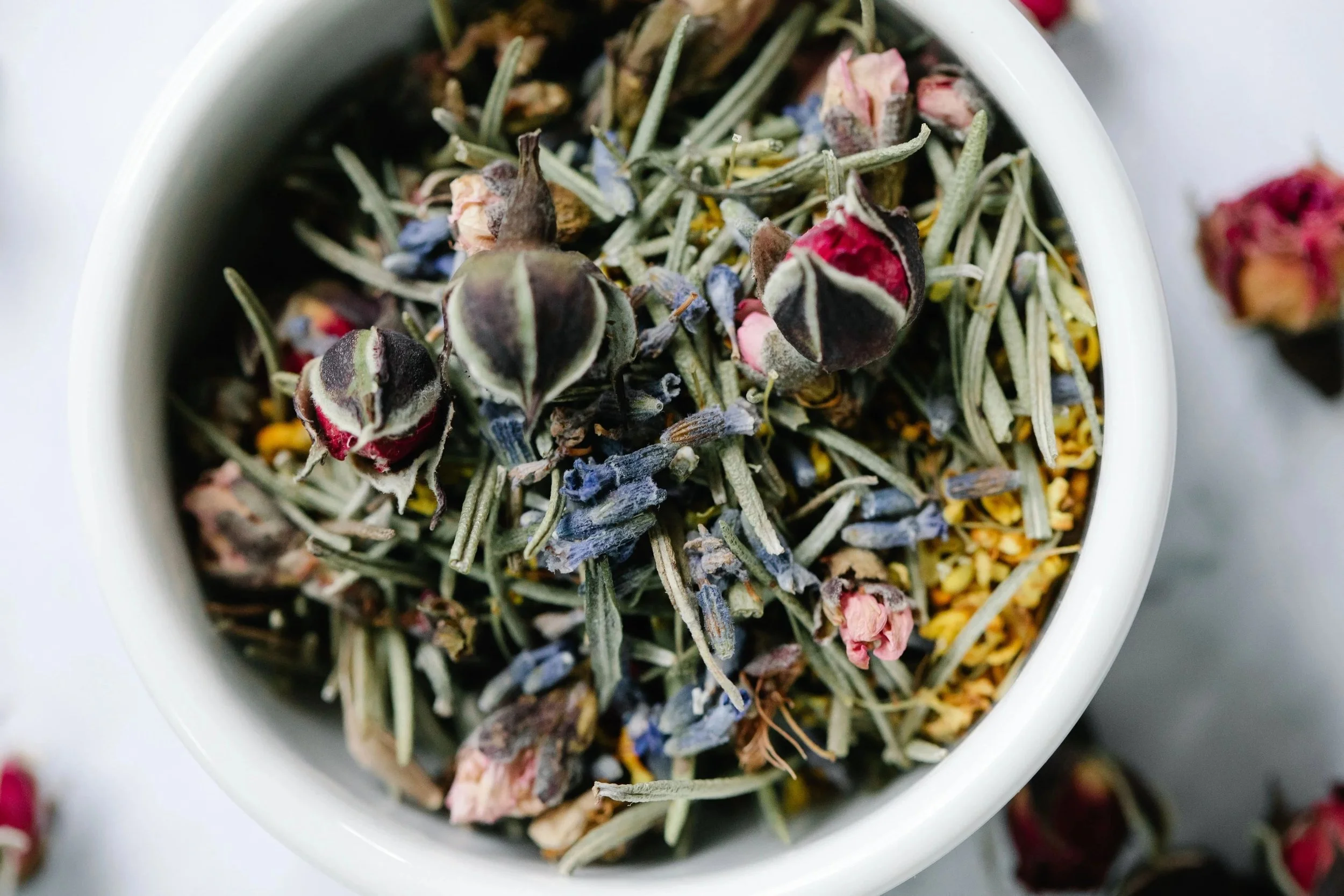
In the first weeks after birth, the body is doing its deepest physical repair: the womb is contracting back to its original size, the placental site is healing, the perineum or cesarean wound is knitting closed, and blood lost at birth is being rebuilt. These are the plants that have traditionally supported that work, both on the body and from within.
For the Perineum and the Tender Places
Calendula is perhaps the gentlest and most trusted of all the healing flowers. Its bright orange petals have long been used to soothe irritated skin and support the healing of small tears and grazes, and it is a staple of the postpartum sitz bath.
Comfrey leaf, known in folk tradition as knitbone, has a reputation for supporting tissue repair and is often included in postpartum sitz blends. It is for external use only and is best kept away from deep or open wounds.
Yarrow was carried by healers for centuries as a herb for wounds and bleeding, and it lends its astringent, toning quality to herbal baths.
Lavender brings its calming scent and gentle antiseptic reputation to the bath, and many Mothers find that its fragrance alone helps the body soften and let go.
Witch hazel, used as a cooling compress or on chilled pads, has long been reached for to ease swelling and the discomfort of hemorrhoids after birth.
To make a simple herbal sitz bath, steep a generous handful of dried calendula, lavender, and yarrow (with comfrey leaf if you wish) in a large pot of just-boiled water for twenty to thirty minutes, strain well, let it cool to a comfortable warmth, and pour it into a shallow bath or sitz basin. Sit and soak for ten to twenty minutes, and let yourself be tended. If you birthed by cesarean, or have stitches that are still fresh, ask your midwife when it is right to begin.
For the Womb and the Blood
Nettle is the great rebuilder of the hedgerow. Its leaves are rich in minerals, including iron, calcium, and magnesium, and a long-steeped nettle infusion was the classic tonic offered to women recovering from blood loss and depletion.
Red raspberry leaf is best known as a pregnancy tea to tone the womb, and many women continue drinking it after birth, when it is traditionally used to support the uterus as it returns to its place.
Ginger runs through postpartum traditions from China to India to Malaysia. It warms the body from within, supports digestion when appetite is low, and gently encourages circulation in a body that ancestral systems describe as cold and empty after birth. Fresh ginger in broths, porridges, and teas is one of the simplest ways to bring this warmth into your recovery.
Plant Allies for Milk, Mood, and the Nervous System
Alongside the physical healing, the postpartum weeks ask for something subtler: the establishing of milk, the settling of a nervous system that has been on high alert, and the tending of a heart that is opening and adjusting at the same time. Here, too, the plants have long been close companions.
For Breastfeeding
Plants used to support milk are known as galactagogues, and nearly every culture has its own. It is worth saying clearly, though, that the most powerful support for milk supply is frequent, effective feeding, rest, nourishment, and good help, ideally from a lactation consultant if you are struggling. Herbs can accompany this foundation, but they cannot replace it, and the research behind most of them is still modest.
Fenugreek is the most widely known, used for centuries in India, the Middle East, and North Africa. It can cause digestive upset in Mother and baby, may lower blood sugar, and is best avoided if you are allergic to peanuts or chickpeas, since these plants are related.
Fennel seed has a gentle, sweet warmth and is traditionally used both to support milk and to ease digestive discomfort, and it is often found in nursing tea blends.
Shatavari, whose name is sometimes translated as "she who has a hundred husbands", is revered in Ayurveda as a nourishing tonic for women across every stage of life, and it has long been given after birth to support milk and replenish the body.
Oats, whether as a warm morning porridge or as an oat straw infusion, are a humble and much-loved food of the nursing Mother, nourishing, grounding, and easy to digest.
For the Nervous System and the Heart
Chamomile is the soft, apple-scented flower of rest. A cup in the evening or during a night feed can help the body let go of tension, and it is gentle enough to be one of the most widely used herbs during breastfeeding.
Lemon balm was called the gladdening herb by the herbalists of old. Its bright, lemony leaves have traditionally been used to lift the spirits and calm an anxious, restless mind.
Milky oat tops, the green oat seed harvested in its milky stage, are considered by herbalists to be one of the most restorative plants for a frayed and depleted nervous system, working slowly and deeply over weeks.
Rose has been offered to Mothers across many traditions, in teas, baths, and oils, as a plant of the heart. Its fragrance alone can soften the edges of an overwhelming day.
Motherwort, as its name suggests, has been a woman's herb for centuries, traditionally used for anxiety, a racing heart, and the emotional intensity of the postpartum period. It is best avoided while bleeding is still heavy, and used under the guidance of a qualified herbalist.
Herbs can be gentle companions for the nervous system, but they are not a treatment for postpartum depression or anxiety. If you are experiencing persistent low mood, intrusive thoughts, panic, or thoughts of harming yourself or your baby, please reach out to a qualified healthcare provider. You deserve real support, and it is available.
Plant Allies for Long-Term Wellbeing
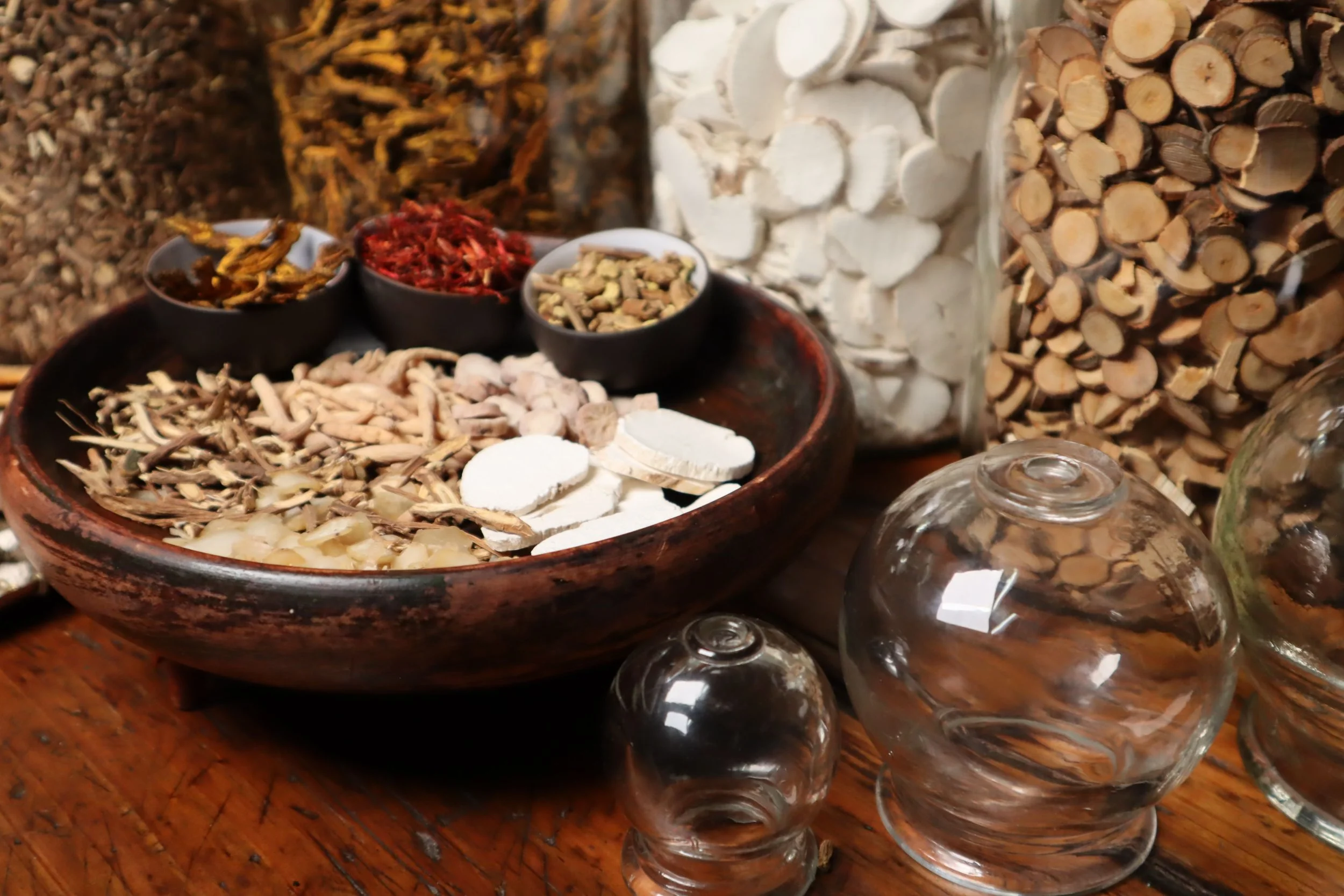
Postpartum does not end at six weeks, and neither does the relationship with the plants. As the months pass, the needs of the body shift from acute healing toward replenishment: rebuilding mineral stores, supporting digestion and hormones as the cycle returns, and sustaining a nervous system that is carrying the long, beautiful weight of mothering. These are the allies that can walk with you through that longer season.
Nettle remains a companion well beyond the first weeks. A strong nettle infusion drunk regularly is one of the simplest and most time-honored ways to keep replenishing the minerals that pregnancy and breastfeeding draw down.
Dandelion, so often dismissed as a weed, is in fact a gift. Its leaves are mineral-rich and gently bitter, and its roasted root has long been used to support digestion and the liver, the organ that quietly carries so much of the work of rebalancing hormones after birth.
Seaweeds, like the miyeok of the Korean postpartum table, bring iodine and trace minerals that support the thyroid, which is often under strain in the years after birth. A little goes a long way, and they can be added to broths, soups, and grain dishes.
Rosehip and hibiscus lend their tart, ruby-colored brightness to teas, along with vitamin C, which supports iron absorption and the building of collagen in healing tissue.
Lady's mantle was traditionally used by European herbalists to support the womb and to steady a cycle as it returns, and it has been a woman's ally for as long as there have been hedgerows to gather it from.
Tulsi, holy basil, is honored in India as a sacred plant of the household, grown in courtyards and tended daily. Its gently uplifting, grounding quality makes it a beautiful daily tea for the Mother who is carrying a great deal.
Your Postpartum Apothecary
If you are preparing for birth, or want to gather a small collection of plant allies to keep nearby, these are a lovely place to begin:
For the sitz bath: calendula, lavender, yarrow, and comfrey leaf
For the womb and the blood: nettle, red raspberry leaf, and fresh ginger
For milk: fennel seed, oats, and, with care, fenugreek
For rest and calm: chamomile, lemon balm, milky oats, and rose
For the months and years ahead: nettle, dandelion, seaweed, rosehip, and tulsi
Perhaps more important than any single herb is the ritual itself. Our ancestors did not reach for plants in a hurry. They steeped, simmered, and poured with intention, and the cup of tea handed to a new Mother carried the message that she was being cared for. Letting a daily cup of nettle or chamomile become a small ceremony of pause may be one of the most healing things you can offer yourself.
Using Herbs Safely After Birth and While Breastfeeding
Plants are gentle, but they are not without power, and the respect our ancestors held for them was part of their wisdom. A few principles will help you work with them safely.
Begin with food-strength preparations. Teas, infusions, broths, and herbal baths are the gentlest ways to work with plants. Concentrated extracts, capsules, and tinctures are stronger, and tinctures usually contain alcohol, so these are best used with guidance.
Introduce one herb at a time. This way, if you or your baby react to something, whether through digestive upset, a rash, or unsettledness, you will know which plant it was.
Watch for plant family allergies. Chamomile, calendula, and yarrow belong to the daisy family, and fenugreek is related to peanuts and chickpeas. If you have known allergies to these families, take extra care.
Be mindful of herbs that may reduce milk supply. Sage, peppermint, and parsley in large, medicinal amounts have traditionally been used to dry up milk. A little in cooking is fine, but they are best avoided as daily teas while you are establishing breastfeeding.
Keep external herbs external. Comfrey, for example, belongs in the bath and never in your teacup.
Check for interactions. If you are taking any medication, including blood thinners, antidepressants, or thyroid medication, speak with your doctor or pharmacist before adding herbs. The LactMed database from the US National Library of Medicine is also a helpful resource for checking herbs and breastfeeding.
Choose good sources. Look for organic, well-dried herbs from a reputable apothecary, with clear labeling of the plant and its origin.
When in doubt, ask. A qualified herbalist, midwife, or lactation consultant can help you choose what is right for your body and your baby.
Remembering the Green Thread
There is something quietly moving about brewing the same leaves that a Mother in a Chinese village, an Indian courtyard, or a European cottage once steeped for a woman who had just given birth. When you pour hot water over nettle or calendula, you are not only making a tea or a bath. You are picking up a thread that runs back through countless generations of women who were tended, in their most tender weeks, by the hands of other women and by the green world around them.
That thread was never fully broken. It was simply set down for a while, and it is still there, waiting to be taken up again. The plants remember how to care for a Mother. And somewhere in your body, beneath the noise of the modern postpartum, you remember how to receive that care.
Let the herbs be one part of your healing, woven together with rest, warmth, nourishment, and the people who love you. That is how they were always meant to be used.
The 7 Pillars of Postpartum Wellness is a free guide to the foundations your body needs to heal after birth, from nourishment and rest to nervous system care, clearly laid out and without overwhelm. Download free
Frequently Asked Questions About Postpartum Herbs
What herbs are good for postpartum recovery?
Some of the most traditional postpartum herbs include calendula, lavender, and yarrow for healing sitz baths; nettle and red raspberry leaf to support the womb and replenish minerals; ginger to warm the body and support digestion; and chamomile, lemon balm, and milky oats to calm the nervous system.
What herbs are safe while breastfeeding?
Gentle food-strength herbs such as chamomile, nettle, fennel, oats, ginger, and rose are widely used during breastfeeding. Every Mother and baby is different, so introduce one herb at a time, watch for any reaction, and check with your healthcare provider or a qualified herbalist, especially if you take any medication.
What is a postpartum sitz bath?
A postpartum sitz bath is a shallow, warm herbal bath for the perineum, traditionally used to soothe soreness, reduce swelling, and support the healing of tears and stitches after birth. Common herbs include calendula, lavender, yarrow, and comfrey leaf.
Which herbs can help with milk supply?
Fenugreek, fennel seed, shatavari, and oats are among the most traditional herbs for milk supply. The research is still limited, and the strongest foundation for milk is frequent, effective feeding with good support. If you are worried about your supply, a lactation consultant is the best place to start.
Are there herbs to avoid while breastfeeding?
Sage, peppermint, and parsley in large medicinal amounts have traditionally been used to reduce milk supply, so they are best avoided as daily teas. Comfrey should only be used externally. Concentrated extracts and tinctures are best used with professional guidance.
How did ancient cultures use herbs after birth?
Across the world, herbs were woven into a whole system of postpartum care. Chinese tradition used ginger and dang gui in warming soups, Ayurveda prescribed shatavari, fenugreek, and ajwain, Malaysian and Indonesian Mothers received jamu tonics and herbal compresses, and Mesoamerican traditions used herbal steam baths in the temazcal.
Cris Dima is a certified postpartum doula, health coach, pre/postnatal fitness specialist, and a hypnobirthing practitioner. She founded The Mother Goddess to hold Mothers in their becoming, through the science, the sacred, and everything in between. Read more about Cris.